
Quick answer: Pennsylvania’s Landlord and Tenant Act sets exactly two residential notice periods: 10 days when the ground is nonpayment of rent, and 15 days when the ground is any other material lease breach. Both periods require specific written content and documented statutory delivery. No lease clause can shorten either one. [1]
Key Takeaways
- 10 days — nonpayment of rent only, under 68 P.S. § 250.501. [1]
- 15 days — all other material lease violations, under 68 P.S. § 250.501. [1]
- Acceptable delivery: personal service, posting on the premises, or certified mail. A text or email alone fails. [1]
- Lease waiver clauses purporting to shorten either period are void under Pennsylvania law. [1]
- A content defect, a delivery defect, and a wrong-period defect each independently void the notice. [1, 2]
- Agricultural and seasonal provisions in § 250.501 do not apply to standard residential rentals. [1]
The Framework Is Binary: Nonpayment Gets 10 Days, Everything Else Gets 15
Before you draft a single word, identify your ground for possession. Pennsylvania courts treat period selection as a threshold question — get it wrong and the filing is dismissed before the merits are ever reached. [1, 2]
Under 68 P.S. § 250.501, the rule works like a switch: one position for rent arrears, the other for every other material breach. [1] Serving a 10-day notice for an unauthorized-occupant violation, or a 15-day notice for a pure rent shortfall, is the same error — the wrong instrument for the stated ground. [1, 2]
- For nonpayment of rent, the minimum notice period is 10 days under 68 P.S. § 250.501. [1]
- For all other material breaches — unauthorized subletting, prohibited animals, property damage, lease-use violations — the minimum period is 15 days under 68 P.S. § 250.501. [1]
- These two categories are mutually exclusive. A notice that bundles a rent shortfall with a property-damage complaint should be reviewed carefully; when the primary ground is nonpayment, the 10-day period controls, but commingling grounds creates a factual record you will have to defend. [1, 2]
What a Valid 10-Day Nonpayment Notice Must Contain
A pay-or-quit notice under 68 P.S. § 250.501 is a statutory instrument, not a collection letter. Pennsylvania courts evaluate the content of the notice, not the landlord’s intent. [1]
State the specific rent amount owed. The notice must identify the exact arrears. Commingling unrelated charges — late fees assessed under a separate lease provision, utility pass-throughs — where those amounts are not the basis for the possession claim can undermine the stated ground. [1]
Demand payment or possession, clearly. The notice must give the tenant a binary choice: pay the arrears in full within the 10-day period or vacate. If the language is ambiguous about what the tenant must do and by when, the notice is defective. [1]
Document delivery against the statutory methods. Pennsylvania recognizes three delivery methods: personal service on the tenant, posting conspicuously on the premises, or certified mail. [1] A text message or email, standing alone, does not satisfy the statutory delivery requirement regardless of whether the tenant acknowledges receiving it. [1]
Your delivery record should note the method used, the exact date and time, and who effected service. If you used certified mail, attach the tracking confirmation and the green card to your file. That documentation becomes the dispositive exhibit if the tenant contests service in a contested filing. [2] For a comparison of how rigorously other states enforce service formalities, the TX 3-Day Notice to Vacate: Delivery & Deadlines shows a similarly unforgiving framework — Pennsylvania’s courts apply the same discipline.
What a Valid 15-Day Breach Notice Must Contain
The content standard for a breach notice mirrors the nonpayment notice in structure but requires specificity about the violation rather than a dollar amount. [1]
Identify the breach with enough particularity for the tenant to understand the grounds. A notice that says only “you have violated your lease” is not sufficient. Name the specific conduct: the date the unauthorized occupant was observed, the nature of the property damage, the specific lease provision breached. [1]
State what the tenant must do within the 15-day period. Where the breach is curable — removing an unauthorized animal, repairing damage — clarity about the required remedy matters. Pennsylvania’s statute does not separately codify a standalone cure period distinct from the notice window; the 15 days functions as the period within which the tenant must remedy the violation before you may file. [1]
Apply the same delivery formalities. The 15-day period does not relax the service requirement. Personal service, posting, or certified mail — no exceptions. [1]
A contemporaneous, dated file linking the specific breach to the notice content and the delivery record is the minimum standard for a contested proceeding. The Defensible Landlord Records: Rule 803(6) Guide covers how to structure that kind of tenancy file so it holds up under evidentiary scrutiny — directly applicable here.
Lease Waiver Clauses Are Void — the Statute Sets the Floor
National lease templates, particularly those drafted for states with shorter notice requirements, sometimes include language stating that the tenant “waives notice” or agrees to a shorter period. Under Pennsylvania law, those clauses do not hold. [1]
68 P.S. § 250.501 establishes a statutory minimum that private contract cannot displace. [1] A lease can provide more notice than the statute requires — it cannot lawfully provide less. [1, 2] A landlord who relies on a waiver clause and serves eight days for a nonpayment notice, or twelve days for a breach notice, has served a defective notice regardless of what the lease says. [2]
This is a concrete risk when you use generic forms downloaded without Pennsylvania-specific review. Waiver language is common in national-template leases. The correct discipline is simple: check the notice period against the statute every time, not against the lease. If the lease purports to authorize a shorter period, treat that clause as though it does not exist when you draft the notice. [1, 2]
FIG1 descriptor: Decision tree — identify ground (nonpayment → 10-day; all other material breach → 15-day) under 68 P.S. § 250.501; branch to required content elements for each type; branch to three statutory delivery methods (personal service, posting, certified mail); terminal node flagging that lease waiver clauses are void and do not alter either period. [1, 2]
Seasonal and Agricultural Provisions Do Not Apply to Residential Rentals
68 P.S. § 250.501 contains separate provisions for agricultural and seasonal tenancies tied to crop cycles and harvest schedules. [1] Those provisions do not govern standard month-to-month or fixed-term residential tenancies in a house, apartment, duplex, or similar dwelling unit. [1]
If you are renting a house with a garden, a detached garage, or outbuildings to a residential tenant, you are operating under the residential framework — the 10-day and 15-day periods are your operative rules. The agricultural framework requires a relationship to agricultural land use that a standard residential rental does not meet. [1]
Three Independent Axes: Period, Content, Delivery
Pennsylvania courts evaluate each requirement separately. Satisfying two of the three does not cure the third. [1, 2]
| Defect type | What goes wrong | Effect |
|---|---|---|
| Wrong period | 10-day notice for a non-rent breach; 15-day for pure nonpayment | Filing dismissed at threshold [1, 2] |
| Content defect | Missing arrears amount; breach not identified with specificity | Notice void on its face regardless of period or delivery [1] |
| Delivery defect | Text, email, or informal hand-delivery without documented statutory method | Landlord cannot prove valid service; stand-alone dismissal ground [2] |
| Framework error | Agricultural provisions applied to a residential rental | All three axes reset to residential 10/15-day structure [1] |
Because each axis is reviewed independently, verify all three before filing — a correct period does not cure a content or delivery problem. [1, 2]
If you have managed properties in other states, Pennsylvania’s rules are distinct. Reviewing the CA 3-Day Notice Pay or Quit: Court Day Rules shows how differently states handle day-counting and service requirements. Pennsylvania’s statute controls for any PA filing, and the differences are material.
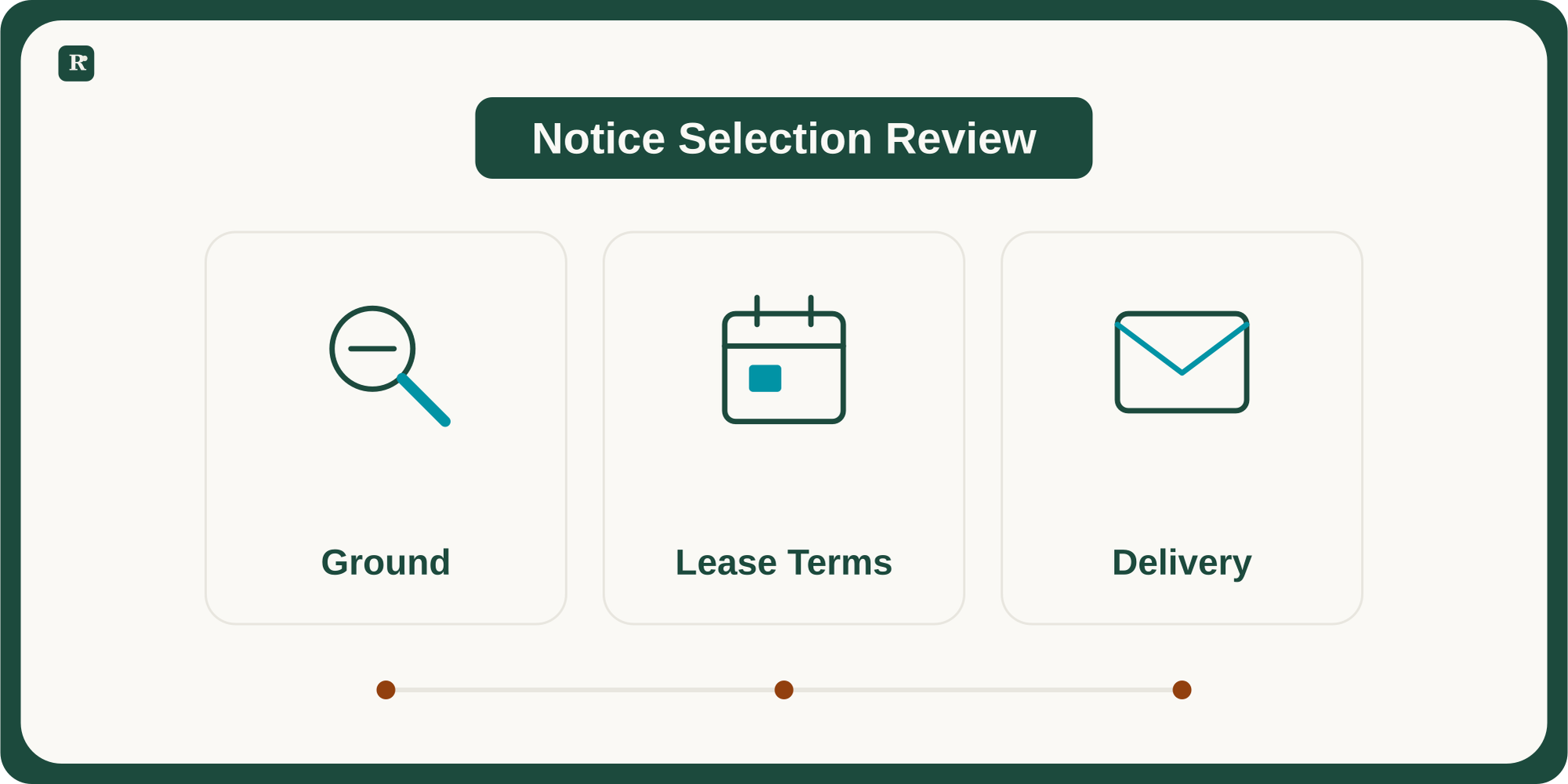 Editorial review checklist; Pennsylvania counsel should resolve the article’s notice-period, waiver and service statements before publication.
Frequently Asked Questions
Can I serve the notice by posting it on the door? Yes. Posting conspicuously on the premises is a statutory delivery method under 68 P.S. § 250.501. [1] Document the date, the location of posting, and who posted it. A photograph with a visible timestamp strengthens the record. [2]
What if the tenant pays partial rent after I serve the notice? Accepting partial payment after serving a nonpayment notice can constitute a waiver of the notice under Pennsylvania law. Before accepting any payment, consult with a Pennsylvania attorney about how partial acceptance affects your right to proceed. This guide describes the statutory framework; it does not constitute legal advice on your specific facts.
Does the 10-day period include weekends? 68 P.S. § 250.501 does not expressly exclude weekends or holidays from the notice period. [1] Count all calendar days from the day after service. Because this affects when the period expires, verify the count carefully and, if the period’s end falls on a holiday or Sunday, consult Pennsylvania Rule of Civil Procedure 106 before filing.
If my lease says 3 days’ notice for nonpayment, is that enforceable? No. A lease provision purporting to shorten the statutory 10-day nonpayment notice period is void under Pennsylvania law. The statute sets the floor. [1]
When rent goes unpaid, the 10-day clock under 68 P.S. § 250.501 is where a Pennsylvania possession case starts correctly or falls apart before you reach the merits. The period is fixed by statute, the content requirements are specific, and no lease clause changes either. A decision record dated on the day you serve the notice — capturing the arrears amount, the delivery method, and the statutory basis — is the documented foundation a contested filing requires.
 Keep the notice and delivery record together for review; the illustration makes no claim about a court’s decision.
Sources
Bracketed numbers point to the sources below. Where several numbers appear together, the statement is our reading across those sources.